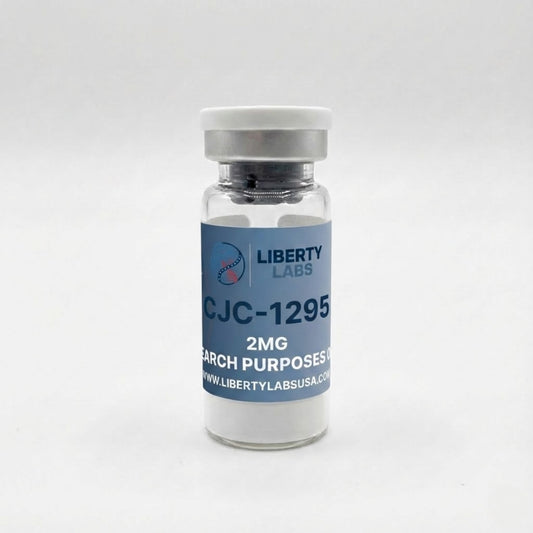
TB-500 + BPC-157 10MG
TB-500 + BPC-157 10MG
✔️Form: Lyophilized Powder
✔️Purity: >99% (HPLC Analysis)
✔️Concentration: 5mg BPC-157 / 5mg TB-500
Couldn't load pickup availability
- Free Shipping
- Easy Returns
- Secure Checkout
Chemical Makeup and Sequence
Chemical Makeup and Sequence
Chemical Makeup:
Component 1: BPC-157 (Body Protection Compound-157)
- Molecular Formula: C62, H98, N16, O22
- Molecular Weight: 1419.55 Da
- Synonyms: Bepecin, PL-10, Pentadecapeptide 157
Component 2: TB-500 (Thymosin Beta-4 Active Fragment)
- Molecular Formula: C38, H68, N10,O14
- Molecular Weight: 889.02 Da
- Synonyms: Acetyl-N-Ser-Asp-Lys-Pro, Thymosin Beta-4 Fragment (17-23)
Research and Clinical Studies
Research and Clinical Studies
[BPC-157 + TB-500] and Soft Tissue Repair
In preclinical murine models involving transected Achilles tendons and collateral ligament injuries, the administration of BPC-157 was observed to accelerate the outgrowth of tendon explants. When co-administered with TB-500, research suggests a potential amplification in the migration of tenocytes (tendon cells). Studies indicate that while BPC-157 may enhance the survival of fibroblasts under oxidative stress, TB-500 simultaneously promotes the directional migration of these cells toward the wound edge, theoretically shortening the inflammatory phase of healing.
[BPC-157 + TB-500] and Angiogenesis
Angiogenesis is a rate-limiting step in tissue regeneration. Research has demonstrated that BPC-157 interacts with the nitric oxide (NO) system, specifically the NO-cGMP pathway, to modulate blood vessel stability. In parallel, TB-500 has been shown in vitro to induce the expression of metalloproteinases, enzymes necessary for degrading the extracellular matrix to allow new vessel growth. The combination is currently under investigation for its potential to revascularize ischemic tissues more rapidly than single-peptide administration.
[BPC-157 + TB-500] and Inflammation Modulation
Chronic inflammation often halts the healing process. In rat models of adjuvant-induced arthritis, BPC-157 was noted to reduce the expression of inflammatory mediators such as TNF-alpha and Interleukin-6 (IL-6). TB-500 complements this by potentially reducing the release of varying cytokines and preventing the formation of adhesions (fibrotic scar tissue) in injured musculature. The dual action suggests a mechanism where inflammation is controlled without suppressing the necessary initial immune response required for debris clearance.
[BPC-157 + TB-500] and Cytoprotection
Beyond musculoskeletal applications, this blend is researched for organ-protective properties. BPC-157 has been widely cited for its "cytoprotective" capability in the gastrointestinal tract, ostensibly protecting the endothelium from ethanol and NSAID-induced damage. TB-500, through its actin-binding capacity, is believed to prevent apoptosis (cell death) in cardiomyocytes following ischemic events. Future studies aim to determine if the blend offers systemic cytoprotection across the blood-brain barrier.
Our Guarantee
Our Guarantee
If you're not 100% satisfied within the first 30 days, just send it back to us and we'll give you a full refund.
No need to worry about the return shipping - we've got you covered!
Shipping Policy
Shipping Policy
We offer fast and reliable shipping on all orders. You can expect to receive it within 7-12 business days based on your location.
Please contact our customer service team for assistance if you have any questions or concerns about your shipment.
Safety and Disclaimers
Safety and Disclaimers
Adverse Effects in Research:
In toxicology studies involving rodents, BPC-157 has demonstrated a high safety profile with no reported lethal dose (LD1) in standard limits. TB-500 is generally well-tolerated in animal models; however, due to its role in cell migration, researchers monitor for potential non-specific cell proliferation. Minimal systemic toxicity has been observed in available literature.
Disclaimer:
RESEARCH USE ONLY! This product is intended for laboratory research and development purposes only. It is not intended for human ingestion, therapeutic use, or diagnostic procedures. The statements made regarding this product have not been evaluated by the Food and Drug Administration. This product is not a dietary supplement, cosmetic, or drug.

Related Products
-
GLUTATHIONE
Regular price From $37.90Regular priceUnit price per -
 Sold out
CAGRILINTIDE
Regular price From $56.40Regular priceUnit price per -
 Sold out
IPAMORELIN
Regular price From $34.80Regular priceUnit price per -
RETATRUTIDE
Regular price From $49.20Regular priceUnit price per -
 Sold out
SERMORELIN
Regular price From $49.20Regular priceUnit price per -
 Sold out
TESAMORELIN
Regular price From $38.90Regular priceUnit price per -
 Sold out
TIRZEPATIDE
Regular price From $46.10Regular priceUnit price per -
 Sold out
5-AMINO-1MQ
Regular price $76.80Regular priceUnit price per -
 Sold out
ACETIC ACID WATER
Regular price $10.20Regular priceUnit price per -
 Sold out
BACTERIOSTATIC WATER
Regular price $8.20Regular priceUnit price per -
CJC-1295 + IPAMORELIN
Regular price $69.70Regular priceUnit price per