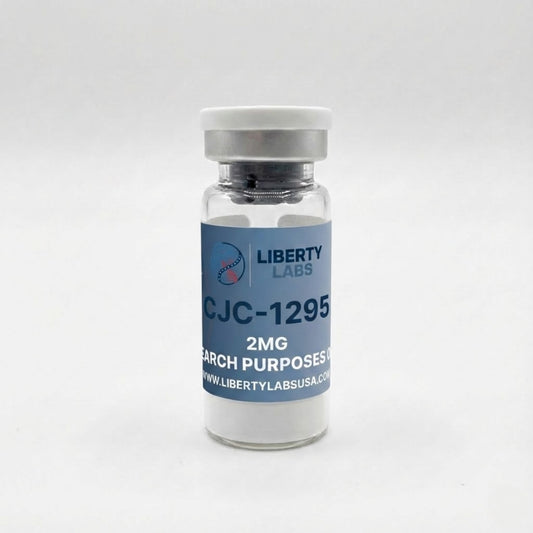
MOTS-C
MOTS-C
✔️Form: Sterile Filtered White Lyophilized Powder
✔️Purity: >99% (HPLC)
✔️Storage: -20°C (Desiccated)
✔️SKU: PEP-MOTSC-005
Couldn't load pickup availability
- Free Shipping
- Easy Returns
- Secure Checkout
Chemical Makeup and Sequence
Chemical Makeup and Sequence
Chemical Makeup:
- Molecular Formula: C101, H152, N28, O22, S2
- Molecular Weight: 2174.6 g/mol
- Synonyms: Mitochondrial Open Reading Frame of the 12S rRNA-c, HN13, 12S rRNA-c peptide.
Sequence:
- Met-Arg-Trp-Gln-Glu-Met-Gly-Tyr-Ile-Phe-Tyr-Pro-Arg-Lys-Leu-Arg
Research and Clinical Studies
Research and Clinical Studies
[MOTS-c] and Metabolic Homeostasis
Studies in murine models suggest that [MOTS-c] plays a significant role in the regulation of whole-body metabolism. In high-fat diet (HFD) induced obesity models, administration of the peptide was observed to suppress weight gain and improve insulin sensitivity. The peptide appears to promote the browning of white adipose tissue and enhance thermogenesis, thereby increasing energy expenditure. Research by Lee et al. (2015) indicates that [MOTS-c] targets skeletal muscle to improve glucose clearance, potentially offering a pathway to mitigate diet-induced insulin resistance.
[MOTS-c] and Physical Performance
[MOTS-c] has been characterized in academic literature as an "exercise mimetic." In aged mouse models, treatment with the peptide was shown to enhance physical capacity, including improved running time and grip strength. It is hypothesized that [MOTS-c] levels naturally rise in skeletal muscle and circulation during physical exertion. Exogenous application in research settings suggests a potential restoration of physical performance parameters that typically decline with age, likely through the enhancement of skeletal muscle cellular metabolism.
[MOTS-c] and Bone Health
Emerging research links mitochondrial function to skeletal integrity. Studies involving ovariectomized murine models (a standard model for post-menopausal osteoporosis) indicate that [MOTS-c] may preserve bone mass. Mechanisms identified include the promotion of osteoblast differentiation (bone formation) and the potential inhibition of osteoclast activity (bone resorption). Specifically, the peptide has been observed to influence the TGF- b/Smad signaling pathway, which is critical for mesenchymal stem cell differentiation into osteoblasts.
[MOTS-c] and Longevity
The role of [MOTS-c] in aging is a subject of ongoing investigation. It has been observed that endogenous levels of [MOTS-c] decline with age in humans. In preclinical longevity studies, intermittent administration of the peptide to middle-aged mice was associated with an extended healthspan and lifespan. This effect is believed to be mediated through the optimization of mitochondrial metabolic flexibility and the reduction of age-associated accumulation of senescent markers.
Our Guarantee
Our Guarantee
If you're not 100% satisfied within the first 30 days, just send it back to us and we'll give you a full refund.
No need to worry about the return shipping - we've got you covered!
Shipping Policy
Shipping Policy
We offer fast and reliable shipping on all orders. You can expect to receive it within 7-12 business days based on your location.
Please contact our customer service team for assistance if you have any questions or concerns about your shipment.
Safety and Disclaimers
Safety and Disclaimers
Side Effects:
In animal research studies, [MOTS-c] has generally been well-tolerated. However, injection site reactions (redness or irritation) have been noted in some murine models. Because [MOTS-c] strongly influences glucose metabolism, there is a theoretical risk of hypoglycemia if metabolic variables are not controlled, although this has primarily been observed in conjunction with other metabolic interventions. Long-term toxicity profiles in non-human primates or humans have not been established.
Disclaimer:
RESEARCH USE ONLY. This product is intended only for in vitro and laboratory research purposes. It is not for human or animal consumption, therapeutic use, or diagnostic procedures.


Related Products
-
GLUTATHIONE
Regular price From $37.90Regular priceUnit price per -
 Sold out
CAGRILINTIDE
Regular price From $56.40Regular priceUnit price per -
 Sold out
IPAMORELIN
Regular price From $34.80Regular priceUnit price per -
RETATRUTIDE
Regular price From $49.20Regular priceUnit price per -
 Sold out
SERMORELIN
Regular price From $49.20Regular priceUnit price per -
 Sold out
TESAMORELIN
Regular price From $38.90Regular priceUnit price per -
 Sold out
TIRZEPATIDE
Regular price From $46.10Regular priceUnit price per -
 Sold out
5-AMINO-1MQ
Regular price $76.80Regular priceUnit price per -
 Sold out
ACETIC ACID WATER
Regular price $10.20Regular priceUnit price per -
 Sold out
BACTERIOSTATIC WATER
Regular price $8.20Regular priceUnit price per -
CJC-1295 + IPAMORELIN
Regular price $69.70Regular priceUnit price per