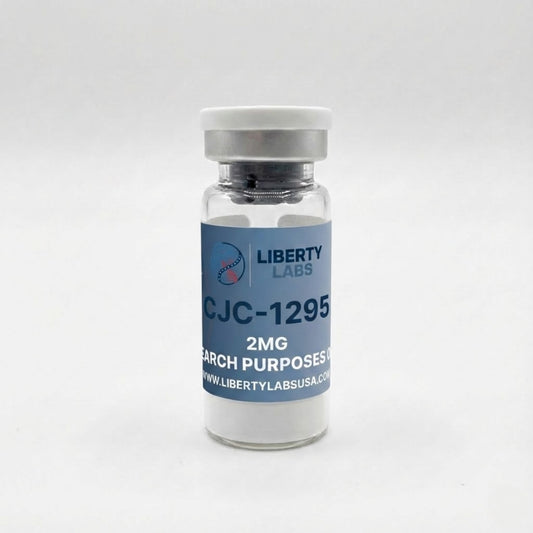
GLOW
GLOW
✔️CAS Number: 129954-34-3
✔️Form: Sterile Lyophilized Powder
✔️Purity: >99% (HPLC Verified)
✔️SKU: GLOW-PEP-005
Couldn't load pickup availability
- Free Shipping
- Easy Returns
- Secure Checkout
Chemical Makeup and Sequence
Chemical Makeup and Sequence
Chemical Makeup:
- Molecular Formula: C33, H57, N11, O9
- Molecular Weight: 751.9 g/mol
- Amino Acid Sequence: Thr-Lys-Pro-Arg-Pro-Gly-Pro
- Synonyms: [GLOW] Heptapeptide, Tuftsin-Analog 7, N-acetyl-L-prolyl-L-glycyl-L-proline.
- Solubility: Soluble in sterile water or bacteriostatic water.
Research and Clinical Studies
Research and Clinical Studies
[GLOW] and Memory Retention
Research in murine models indicates that [GLOW] may influence cognitive processes related to memory consolidation and retrieval. In active avoidance tasks, subjects administered the peptide demonstrated a statistically significant improvement in the retention of learned behaviors compared to saline controls. It is hypothesized that this effect is mediated through the upregulation of BDNF mRNA in the hippocampus, a region of the brain integral to spatial memory and learning.
[GLOW] and Neurotransmitter Signaling (GABA/Serotonin)
Biochemical assays suggest that [GLOW] does not bind directly to the orthosteric sites of GABA-A receptors but rather acts as an allosteric modulator. Studies indicate that the peptide may enhance the stabilizing effect of GABA on neural excitability. Additionally, alterations in serotonin (5-HT) metabolite concentrations have been observed in the striatum following administration, suggesting that [GLOW] may influence the serotonergic turnover rate. This dual modulation is of significant interest in research regarding anxiety-like behaviors and cognitive stability under stress.
[GLOW] and Inflammation
The parent compound of [GLOW], Tuftsin, is a known immunomodulator. Research into [GLOW] has preserved these properties, with studies showing potential regulation of pro-inflammatory cytokines such as IL-6. In models of systemic inflammation, [GLOW] was observed to modulate the gene expression of inflammatory markers, suggesting a potential role in reducing neuroinflammation. This "immune-to-brain" signaling pathway is currently a primary subject of investigation for neuroprotective applications.
[GLOW] and Gene Expression
Transcriptomic analysis in rodent cortex tissues has revealed that [GLOW] administration correlates with changes in the expression of genes related to neurotransmission and ion channel regulation. Specifically, upregulation was noted in genes responsible for GABA receptor subunits. These findings imply that the peptide’s long-term effects may be driven by epigenetic modifications or sustained changes in protein synthesis rather than transient receptor interaction alone.
Our Guarantee
Our Guarantee
If you're not 100% satisfied within the first 30 days, just send it back to us and we'll give you a full refund.
No need to worry about the return shipping - we've got you covered!
Shipping Policy
Shipping Policy
We offer fast and reliable shipping on all orders. You can expect to receive it within 7-12 business days based on your location.
Please contact our customer service team for assistance if you have any questions or concerns about your shipment.
Safety and Disclaimers
Safety and Disclaimers
Side Effects (Animal Models):
In preclinical rodent studies, [GLOW] has demonstrated a favorable toxicity profile. High-dose administration did not result in significant motor impairment or sedation, distinguishing it from traditional benzodiazepines. However, rapid metabolism into constituent amino acids was observed. No withdrawal phenotype has been documented in animal models following the cessation of short-term protocols.
Research Use Only: WARNING:
This product is intended for Laboratory Research Use Only (RUO). It is not intended for human consumption, diagnostic, therapeutic, or clinical procedures. This product is not a dietary supplement, food, or drug. It must be handled only by qualified professionals in a laboratory setting.

Related Products
-
GLUTATHIONE
Regular price From $37.90Regular priceUnit price per -
 Sold out
CAGRILINTIDE
Regular price From $56.40Regular priceUnit price per -
 Sold out
IPAMORELIN
Regular price From $34.80Regular priceUnit price per -
RETATRUTIDE
Regular price From $49.20Regular priceUnit price per -
 Sold out
SERMORELIN
Regular price From $49.20Regular priceUnit price per -
 Sold out
TESAMORELIN
Regular price From $38.90Regular priceUnit price per -
 Sold out
TIRZEPATIDE
Regular price From $46.10Regular priceUnit price per -
 Sold out
5-AMINO-1MQ
Regular price $76.80Regular priceUnit price per -
 Sold out
ACETIC ACID WATER
Regular price $10.20Regular priceUnit price per -
 Sold out
BACTERIOSTATIC WATER
Regular price $8.20Regular priceUnit price per -
CJC-1295 + IPAMORELIN
Regular price $69.70Regular priceUnit price per