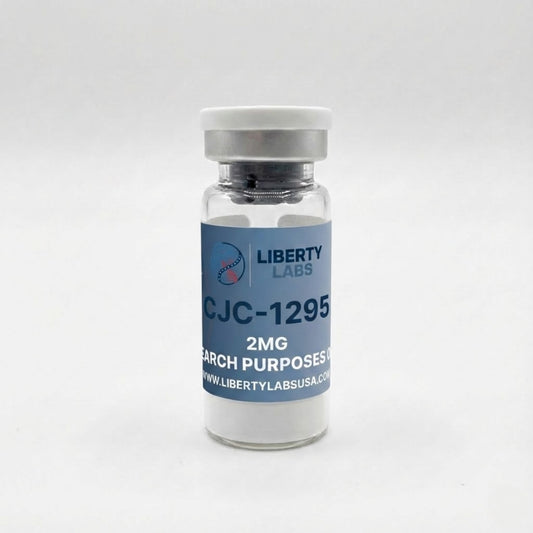
5-AMINO-1MQ
5-AMINO-1MQ
✔️CAS Number: 42464-96-0
✔️Form: Lyophilized Powder
✔️Purity: ≥99% (HPLC)
✔️SKU: 5A-1MQ-10
Couldn't load pickup availability
- Free Shipping
- Easy Returns
- Secure Checkout
Chemical Makeup and Sequence
Chemical Makeup and Sequence
Chemical Makeup:
- Chemical Name: 5-amino-1-methylquinolin-1-ium
- Molecular Formula: C10, H11, N2+
- Molecular Weight: 159.21 g/mol1
- Synonyms: 5-Amino-1-methylquinolinium; NNMT Inhibitor; 5-amino-1MQ.
Research and Clinical Studies
Research and Clinical Studies
[5-AMINO-1MQ] and Adipogenesis (Obesity Models)
Research utilizing murine models of diet-induced obesity (DIO) has focused on the compound's ability to modulate white adipose tissue. In studies conducted by Neelakantan et al., mice administered Amino-1MQ displayed a significant reduction in body mass and white adipose tissue volume without alterations in food intake. The data suggests that the inhibition of NNMT prevents the diversion of nicotinamide into 1-MNA, thereby sustaining NAD+ levels required for enhanced lipid oxidation. It was observed that treated cohorts exhibited a downregulation of lipogenic gene expression, indicating a potential shift toward energy expenditure rather than storage.
[5-AMINO-1MQ] and Muscle Satellite Cells
Investigations into skeletal muscle physiology suggest that 5-Amino-1MQ may influence the regenerative capacity of muscle tissue. In aged murine subjects, the inhibition of NNMT was correlated with the activation of muscle satellite cells (stem cells responsible for repair). Researchers hypothesize that by restoring NAD+ pools in senescent muscle fibers, the compound may mitigate the effects of sarcopenia. Experimental data indicated improved contractile function and muscle cross-sectional area in treated groups compared to controls, suggesting a role in maintaining muscle physiology during metabolic stress.
[5-AMINO-1MQ] and Cellular Senescence
The relationship between NNMT activity and cellular aging is a primary subject of investigation. High levels of NNMT and its product, 1-MNA, are often biomarkers for cellular senescence and metabolic dysfunction. In vitro assays have demonstrated that the suppression of NNMT by 5-Amino-1MQ activates the SIRT1 pathway. SIRT1 is an NAD+ dependent deacetylase involved in DNA repair and the regulation of mitochondrial biogenesis. Consequently, studies are currently exploring whether this pathway can delay cellular senescence phenotypes in metabolically active tissues such as the liver and kidney.
[5-AMINO-1MQ] and Metabolic Syndrome
Preclinical trials indicate that NNMT expression is upregulated in diabetic and insulin-resistant states. By targeting this enzyme, 5-Amino-1MQ is being researched for its potential to improve glucose tolerance and insulin sensitivity. In rodent models fed high-fat diets, administration of the compound was associated with lower plasma insulin levels and improved glucose disposal rates. The mechanism is believed to be linked to the restoration of metabolic flux through the Krebs cycle, driven by increased bioavailability of NAD+
Our Guarantee
Our Guarantee
If you're not 100% satisfied within the first 30 days, just send it back to us and we'll give you a full refund.
No need to worry about the return shipping - we've got you covered!
Shipping Policy
Shipping Policy
We offer fast and reliable shipping on all orders. You can expect to receive it within 7-12 business days based on your location.
Please contact our customer service team for assistance if you have any questions or concerns about your shipment.
Safety and Disclaimers
Safety and Disclaimers
Toxicology and Side Effects:
In preclinical toxicity studies involving murine models, 5-Amino-1MQ was administered at varying dosages. Reports indicate that the compound was generally well-tolerated at therapeutic ranges, with no significant changes in liver enzymes or renal markers observed in acute phases. However, due to its influence on methyl-donor pools (SAM), potential effects on overall methylation status remain a subject of investigation. Long-term safety data in non-human primates or humans is not currently available.
Research Use Only:
This product is sold for RESEARCH PURPOSES ONLY. It is not intended for human consumption, diagnostic use, or therapeutic application. This product is strictly for laboratory research, in vitro testing, and non-clinical in vivo studies. The physiological and toxicological properties of this chemical have not been fully investigated. Handling should be performed by qualified professionals using appropriate personal protective equipment (PPE).

Related Products
-
GLUTATHIONE
Regular price From $37.90Regular priceUnit price per -
 Sold out
CAGRILINTIDE
Regular price From $56.40Regular priceUnit price per -
 Sold out
IPAMORELIN
Regular price From $34.80Regular priceUnit price per -
RETATRUTIDE
Regular price From $49.20Regular priceUnit price per -
 Sold out
SERMORELIN
Regular price From $49.20Regular priceUnit price per -
 Sold out
TESAMORELIN
Regular price From $38.90Regular priceUnit price per -
 Sold out
TIRZEPATIDE
Regular price From $46.10Regular priceUnit price per -
 Sold out
5-AMINO-1MQ
Regular price $76.80Regular priceUnit price per -
 Sold out
ACETIC ACID WATER
Regular price $10.20Regular priceUnit price per -
 Sold out
BACTERIOSTATIC WATER
Regular price $8.20Regular priceUnit price per -
CJC-1295 + IPAMORELIN
Regular price $69.70Regular priceUnit price per