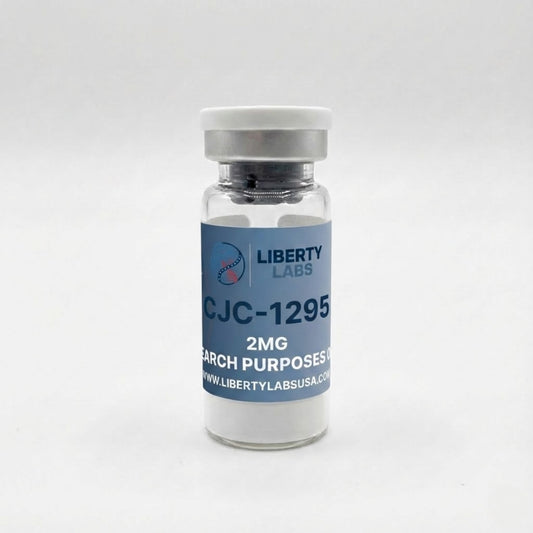
KLOW
KLOW
✔️Form: Lyophilized Powder
✔️Purity: >99% (HPLC Analysis)
✔️Storage: -20°C to 4°C
✔️SKU: KLOW-80-LYO
Couldn't load pickup availability
- Free Shipping
- Easy Returns
- Secure Checkout
Chemical Makeup and Sequence
Chemical Makeup and Sequence
Composition:
- BPC-157 (Pentadecapeptide)
- TB-500 (Thymosin Beta-4 Fragment)
- GHK-Cu (Copper Tripeptide-1)
- KPV (Lysine-Proline-Valine)
Molecular Formula:
- Component A (BPC-157): C₆₂H₉₈N₁₆O₂₂
- Component B (TB-500): C₂₁₂H₃₅₀N₅₆O₇₈S
- Component C (GHK-Cu): C₁₄H₂₂CuN₆O₄
- Component D (KPV): C₁₆H₃₀N₄O₄
Molecular Weight:
- Composite: Multi-fractional (Components range from ~340 Da to ~4963 Da)
Synonyms:
- Research Repair Blend, Quad-Stack Reconstruction Peptide, GHK-Cu/BPC/TB/KPV Complex
Research and Clinical Studies
Research and Clinical Studies
[KLOW] and Angiogenesis
Research utilizing the specific components of [KLOW] suggests a potent influence on vascular growth factors. In murine ischemia models, the administration of BPC-157 (a key constituent) was observed to promote the expression of VEGFR2 (Vascular Endothelial Growth Factor Receptor 2), facilitating the formation of collateral blood vessels. Concurrently, TB-500 studies indicate an enhancement in endothelial cell migration. The combined presence of these peptides in the [KLOW] formulation is hypothesized to accelerate revascularization in damaged tissues more effectively than singular administration.
[KLOW] and Inflammation Modulation
The inclusion of KPV in the [KLOW] blend introduces a specific pathway for inflammatory control. Studies involving KPV indicate it possesses significant antimicrobial and anti-inflammatory properties, primarily through the inhibition of NF-κB and MAP kinase pathways. In models of chemically induced colitis, subjects treated with KPV showed reduced levels of inflammatory markers. When co-administered with BPC-157, which modulates the release of inflammatory mediators like leukotrienes, the [KLOW] profile suggests a potential additive effect in mitigating systemic and localized inflammation.
[KLOW] and Extracellular Matrix (ECM) Remodeling
[KLOW] is heavily investigated for its potential role in skin and connective tissue integrity, largely due to the GHK-Cu component. Clinical assays in vitro have demonstrated that GHK-Cu stimulates the synthesis of collagen (types I and III) and elastin, while also regulating the breakdown of irregular collagen aggregates (scar tissue) via metalloproteinases. Research indicates that the addition of TB-500 may further support this process by organizing the actin cytoskeleton, potentially leading to more ordered tissue regeneration and reduced fibrosis in wound healing models.
[KLOW] and Cytoprotection
The cytoprotective effects of [KLOW] are derived from the gastric and neural protection observed in BPC-157 studies. In laboratory settings, BPC-157 has been shown to protect cells against toxin-induced damage (e.g., NSAIDs, alcohol). Preliminary data suggests that the multi-peptide approach of [KLOW] may extend this protection to musculoskeletal cells (tenocytes and myoblasts), preserving cell viability under oxidative stress conditions.
Our Guarantee
Our Guarantee
If you're not 100% satisfied within the first 30 days, just send it back to us and we'll give you a full refund.
No need to worry about the return shipping - we've got you covered!
Shipping Policy
Shipping Policy
We offer fast and reliable shipping on all orders. You can expect to receive it within 7-12 business days based on your location.
Please contact our customer service team for assistance if you have any questions or concerns about your shipment.
Safety and Disclaimers
Safety and Disclaimers
Side Effects:
In animal studies involving the components of [KLOW], observed physiological responses include transient flushing, injection site irritation, and potential interactions with blood pressure regulation mechanisms (due to NO pathway modulation). High-dose copper administration (via GHK-Cu) carries theoretical risks of copper accumulation; however, the concentrations in this blend are typically below toxic thresholds in controlled settings.
Withdrawal:
No chemical dependency or withdrawal symptoms have been documented in murine models following the cessation of these peptide sequences.
Research Use Only: WARNING!
This product is intended exclusively for laboratory research and development purposes. It is not for human consumption, diagnostic use, or therapeutic application. The properties described herein are based on academic research and animal studies; they have not been evaluated by regulatory bodies for safety or efficacy in humans. Handling should be performed by qualified professionals using appropriate Personal Protective Equipment (PPE).

Related Products
-
GLUTATHIONE
Regular price From $37.90Regular priceUnit price per -
 Sold out
CAGRILINTIDE
Regular price From $56.40Regular priceUnit price per -
 Sold out
IPAMORELIN
Regular price From $34.80Regular priceUnit price per -
RETATRUTIDE
Regular price From $49.20Regular priceUnit price per -
 Sold out
SERMORELIN
Regular price From $49.20Regular priceUnit price per -
 Sold out
TESAMORELIN
Regular price From $38.90Regular priceUnit price per -
 Sold out
TIRZEPATIDE
Regular price From $46.10Regular priceUnit price per -
 Sold out
5-AMINO-1MQ
Regular price $76.80Regular priceUnit price per -
 Sold out
ACETIC ACID WATER
Regular price $10.20Regular priceUnit price per -
 Sold out
BACTERIOSTATIC WATER
Regular price $8.20Regular priceUnit price per -
CJC-1295 + IPAMORELIN
Regular price $69.70Regular priceUnit price per