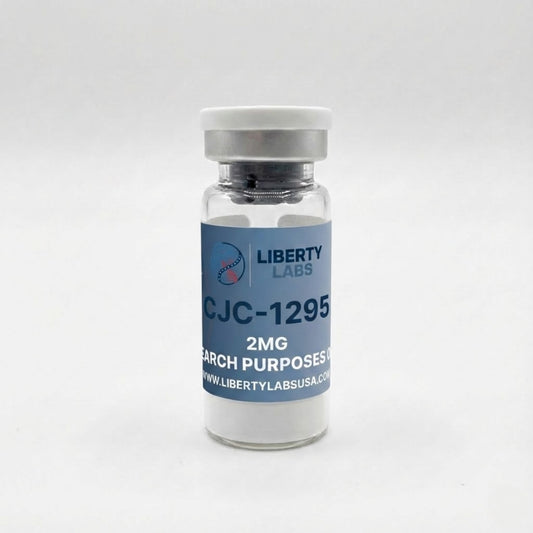
HMG
HMG
✔️Form: Lyophilized Powder
✔️*Purity: >99% (High Purity Menotropin Complex)
✔️SKU: HMG-075-IU
Couldn't load pickup availability
- Free Shipping
- Easy Returns
- Secure Checkout
Chemical Makeup and Sequence
Chemical Makeup and Sequence
Chemical Makeup:
- Molecular Formula: Glycoprotein Complex (Heterodimeric a and b subunits)
- Molecular Weight: Variable (~30,000 – 32,000 Da per hormone unit)
- Synonyms: Menotropin, Human Menopausal Gonadotropin, hMG, Menotropins
- Composition: 1:1 ratio of Follicle-Stimulating Hormone (FSH) and Luteinizing Hormone (LH) activity.
Research and Clinical Studies
Research and Clinical Studies
[HMG (75IU)] and Folliculogenesis
In murine and primate models, the administration of HMG has been observed to initiate and sustain the growth of ovarian follicles beyond the antral stage. Research indicates that the FSH component drives the proliferation of granulosa cells and the expression of aromatase enzymes, while the LH component is essential for the synthesis of androgen precursors required for estrogen production. Comparative studies suggest that the presence of LH activity in HMG formulations may lead to higher cumulative estrogen levels in follicular fluid compared to FSH-only treatments.
[HMG (75IU)] and Spermatogenesis
Studies involving male rodent models of hypogonadotropic hypogonadism typically utilize HMG to assess the restoration of testicular function. It has been documented that the FSH activity within HMG acts on Sertoli cells to support the blood-testis barrier and nourish developing spermatocytes. Concurrently, the LH activity stimulates Leydig cells to produce testosterone. Research suggests that this synergistic action is necessary for the completion of meiosis and the formation of mature spermatozoa in models where endogenous gonadotropin secretion is absent.
[HMG (75IU)] and Steroidogenesis
The influence of HMG on steroid hormone pathways is a key area of investigation. In vitro assays using isolated theca and granulosa cells have shown that HMG exposure upregulates the expression of key steroidogenic enzymes, including P450scc and b-HSD. In animal subjects, this upregulation correlates with increased serum concentrations of estradiol and progesterone. These findings support the hypothesis that the dual gonadotropin activity of HMG more closely mimics physiological pituitary secretion than single-agent preparations.
[HMG (75IU)] and Endometrial Receptivity
Beyond gonadal stimulation, limited research has explored the impact of HMG on endometrial tissue markers. Studies in mammalian models have examined the expression of integrins and leukemia inhibitory factor (LIF) in the uterine lining following HMG administration. Preliminary data indicates that while HMG effectively drives follicular development, the resultant supraphysiological steroid levels may alter the histological timing of the endometrium, a phenomenon described as "endometrial advancement" in some research literature.
Our Guarantee
Our Guarantee
If you're not 100% satisfied within the first 30 days, just send it back to us and we'll give you a full refund.
No need to worry about the return shipping - we've got you covered!
Shipping Policy
Shipping Policy
We offer fast and reliable shipping on all orders. You can expect to receive it within 7-12 business days based on your location.
Please contact our customer service team for assistance if you have any questions or concerns about your shipment.
Safety and Disclaimers
Safety and Disclaimers
Side Effects (Animal Models):
In toxicity studies involving varying dosages of HMG, observed adverse effects include ovarian enlargement and vascular permeability changes, indicative of Ovarian Hyperstimulation Syndrome (OHSS) pathology. In male models, gynecomastia-like tissue changes have been noted due to elevated estradiol levels. Injection site inflammation is a common localized reaction recorded in subcutaneous administration protocols.
Withdrawal:
Cessation of HMG administration in dependent models typically results in a rapid decline in gonadal steroid output and regression of follicular or spermatogenic status to baseline levels.
DISCLAIMER: For Research Use Only (RUO).
This product is intended solely for laboratory research and development purposes. It is not for human or veterinary diagnostic or therapeutic use. Not for use in food, cosmetics, or household products. The statements made regarding this product have not been evaluated by regulatory agencies. Usage is restricted to qualified professionals strictly in accordance with applicable laboratory safety guidelines.

Related Products
-
GLUTATHIONE
Regular price From $37.90Regular priceUnit price per -
 Sold out
CAGRILINTIDE
Regular price From $56.40Regular priceUnit price per -
 Sold out
IPAMORELIN
Regular price From $34.80Regular priceUnit price per -
RETATRUTIDE
Regular price From $49.20Regular priceUnit price per -
 Sold out
SERMORELIN
Regular price From $49.20Regular priceUnit price per -
 Sold out
TESAMORELIN
Regular price From $38.90Regular priceUnit price per -
 Sold out
TIRZEPATIDE
Regular price From $46.10Regular priceUnit price per -
 Sold out
5-AMINO-1MQ
Regular price $76.80Regular priceUnit price per -
 Sold out
ACETIC ACID WATER
Regular price $10.20Regular priceUnit price per -
 Sold out
BACTERIOSTATIC WATER
Regular price $8.20Regular priceUnit price per -
CJC-1295 + IPAMORELIN
Regular price $69.70Regular priceUnit price per