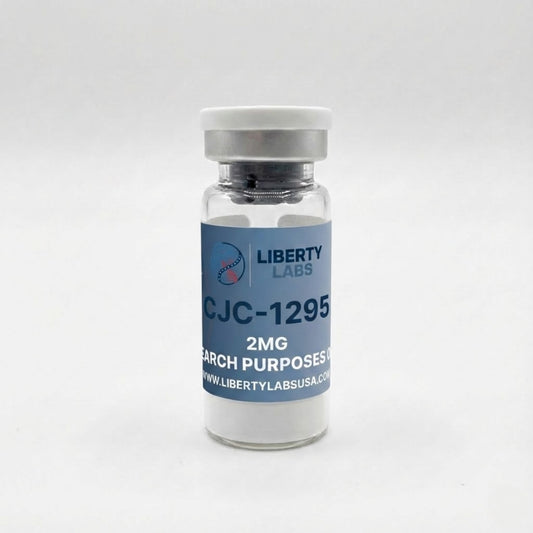
SELANK
SELANK
✔️CAS Number: 129954-34-3
✔️Form: Lyophilized Powder
✔️Purity: >99% (HPLC Analysis)
✔️SKU: PEP-SEL-10MG
Couldn't load pickup availability
- Free Shipping
- Easy Returns
- Secure Checkout
Chemical Makeup and Sequence
Chemical Makeup and Sequence
Chemical Makeup:
- Molecular Formula: C₃₃H₅₇N₁₁O₅
- Molecular Weight: 751.9 g/mol
- Synonyms: TP-7, Selanc, Tuftsin analog
Sequence:
- Thr-Lys-Pro-Arg-Pro-Gly-Pro
Research and Clinical Studies
Research and Clinical Studies
[SELANK] and Anxiety Regulation
Research utilizing murine models of generalized anxiety suggests that [SELANK] exhibits pronounced anxiolytic activity. In open-field and elevated plus-maze tests, subjects administered the peptide displayed reduced anxiety markers comparable to low-dose benzodiazepines (such as diazepam) but without the associated sedative or muscle-relaxant effects. The mechanism is hypothesized to be the modulation of GABA-A receptor gene expression and the stabilization of enkephalins in the blood serum.
[SELANK] and Cognitive Function
Studies focused on cognitive impairment—specifically induced by ethanol or sensory stress—indicate that [SELANK] may preserve memory traces and learning ability. In rat models, the peptide was observed to prevent the ethanol-induced accumulation of errors in active avoidance tasks. This nootropic potential is linked to the upregulation of BDNF (Brain-Derived Neurotrophic Factor) in the hippocampus, a critical protein for neuroplasticity and long-term memory formation.
[SELANK] and Inflammatory Response
Beyond its neurological effects, [SELANK] acts as an immunomodulator. Research indicates that the peptide influences the expression of genes involved in the inflammatory response, including IL-6 (Interleukin-6) and C3 (Complement component 3). In subjects exposed to social stress, the administration of [SELANK] was correlated with a normalization of cytokine levels, suggesting a potential role in mitigating stress-induced immune dysfunction.
[SELANK] and Depression (Anhedonia)
In WAG/Rij rats, a genetic model for depression and absence epilepsy, [SELANK] was observed to counteract symptoms of anhedonia (inability to feel pleasure). Subjects treated with the peptide showed restored sucrose preference and increased mobility in forced swim tests. These findings suggest that the peptide’s modulation of the dopamine and serotonin turnover rates contributes to an antidepressant-like effect in non-clinical models.
Our Guarantee
Our Guarantee
If you're not 100% satisfied within the first 30 days, just send it back to us and we'll give you a full refund.
No need to worry about the return shipping - we've got you covered!
Shipping Policy
Shipping Policy
We offer fast and reliable shipping on all orders. You can expect to receive it within 7-12 business days based on your location.
Please contact our customer service team for assistance if you have any questions or concerns about your shipment.
Safety and Disclaimers
Safety and Disclaimers
Side Effects & Withdrawal:
In comparative animal studies, [SELANK] did not exhibit the withdrawal symptoms or physical dependence commonly associated with traditional GABAergic agonists (benzodiazepines). High-dose administration in rodent models has not resulted in sedation, motor impairment, or toxicity.
Research Use Only:
This product is sold strictly for laboratory research and development purposes. It is not intended for human consumption, diagnostic use, or therapeutic application. The statements made regarding this peptide have not been evaluated by the FDA. Handling should be performed only by qualified professionals equipped with appropriate personal protective equipment (PPE).


Related Products
-
GLUTATHIONE
Regular price From $37.90Regular priceUnit price per -
 Sold out
CAGRILINTIDE
Regular price From $56.40Regular priceUnit price per -
 Sold out
IPAMORELIN
Regular price From $34.80Regular priceUnit price per -
RETATRUTIDE
Regular price From $49.20Regular priceUnit price per -
 Sold out
SERMORELIN
Regular price From $49.20Regular priceUnit price per -
 Sold out
TESAMORELIN
Regular price From $38.90Regular priceUnit price per -
 Sold out
TIRZEPATIDE
Regular price From $46.10Regular priceUnit price per -
 Sold out
5-AMINO-1MQ
Regular price $76.80Regular priceUnit price per -
 Sold out
ACETIC ACID WATER
Regular price $10.20Regular priceUnit price per -
 Sold out
BACTERIOSTATIC WATER
Regular price $8.20Regular priceUnit price per -
CJC-1295 + IPAMORELIN
Regular price $69.70Regular priceUnit price per