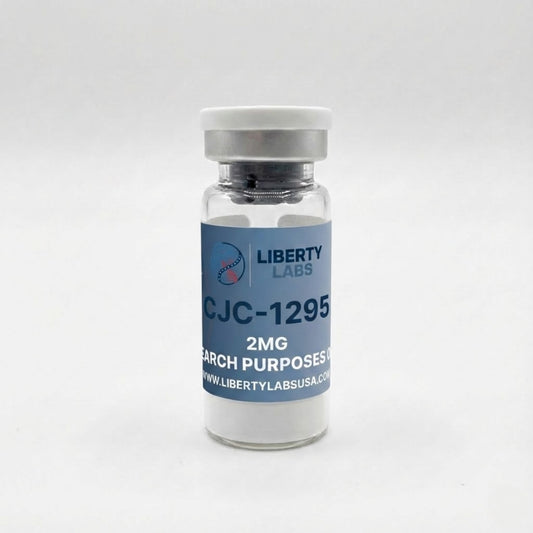
TESAMORELIN
TESAMORELIN
✔️Form: Lyophilized White Powder
✔️Purity: >99% (HPLC Verified)
✔️SKU: TESA-10MG-LYO
Couldn't load pickup availability
- Free Shipping
- Easy Returns
- Secure Checkout
Chemical Makeup and Sequence
Chemical Makeup and Sequence
Chemical Makeup:
- Molecular Formula: C221, H366, N72, O67, S
- Molecular Weight: 5135.9 g/mol
- Synonyms: TH9507, Egrifta, trans-3-hexenoyl-GHRH
Sequence:
- trans-3-hexenoyl-[Tyr1]hGRF(1–44)NH2
Research and Clinical Studies
Research and Clinical Studies
Tesamorelin and Visceral Adipose Tissue (VAT)
Research in murine and primate models has extensively focused on Tesamorelin's impact on visceral adiposity. The mechanism appears to be mediated through the lipolytic action of the upregulated pulsatile growth hormone. Studies suggest that the increase in endogenous GH promotes the hydrolysis of triglycerides in adipose tissue, specifically targeting metabolically active visceral fat depots. In clinical trials involving subjects with HIV-associated lipodystrophy, Tesamorelin was observed to significantly reduce visceral adipose tissue (VAT) area without significantly altering subcutaneous fat, suggesting a tissue-specific metabolic affinity.
Tesamorelin and Cognitive Function
Investigation into the neuroprotective potential of GHRH analogs has led to studies examining Tesamorelin in the context of Mild Cognitive Impairment (MCI). Research indicates that GHRH receptors are present in the brain, and systemic administration may influence neurotransmitter concentrations. In randomized control trials involving older adults, daily administration was associated with improvements in executive function and verbal memory. The proposed mechanism involves the modulation of GABA (gamma-aminobutyric acid) levels and N-acetylaspartate (NAA) in the frontal cortex, suggesting a potential role in enhancing neural efficiency and synaptic plasticity.
Tesamorelin and Hepatic Lipid Metabolism
Given its lipolytic properties, Tesamorelin has been a subject of interest in research regarding Non-Alcoholic Fatty Liver Disease (NAFLD). Animal studies have explored whether the reduction of visceral fat correlates with a reduction in ectopic fat deposition in the liver. Preliminary data suggests that the peptide may influence hepatic lipid content and oxidative stress markers. The hypothesized pathway involves the GH-IGF-1 axis reducing hepatic de novo lipogenesis, potentially improving liver histology in models of metabolic syndrome.
Tesamorelin and Peripheral Nerve Injury
Emerging research has utilized Tesamorelin to study peripheral nerve regeneration. In rat models with sciatic nerve injuries, GHRH analogs have been observed to accelerate the rate of nerve regeneration and functional recovery. Researchers posit that this effect is likely mediated through the systemic upregulation of IGF-1, which is known to have neurotrophic properties, promoting Schwann cell proliferation and axonal outgrowth following trauma.
Our Guarantee
Our Guarantee
If you're not 100% satisfied within the first 30 days, just send it back to us and we'll give you a full refund.
No need to worry about the return shipping - we've got you covered!
Shipping Policy
Shipping Policy
We offer fast and reliable shipping on all orders. You can expect to receive it within 7-12 business days based on your location.
Please contact our customer service team for assistance if you have any questions or concerns about your shipment.
Safety and Disclaimers
Safety and Disclaimers
Adverse Events in Research Models:
In clinical and animal studies, the safety profile of Tesamorelin has been well-documented. Common adverse events observed in subjects include arthralgia (joint pain), injection site erythema, and peripheral edema. Due to its mechanism of increasing GH and subsequently IGF-1, there is a theoretical risk of glucose intolerance; studies have monitored HbA1c levels, observing mild increases in some cohorts. Hypersensitivity reactions were noted in a small percentage of test subjects.
Storage Instructions:
Lyophilized Tesamorelin is stable at room temperature for 90 days but should be stored in a freezer below -8°C for any extended period. After reconstitution, the solution must be stored at 2°C – 8°C and used within the timeframe specified by standard laboratory protocols.
PRODUCT DISCLAIMER: RESEARCH USE ONLY
This product is intended strictly for laboratory research and development purposes. It is not intended for human consumption, therapeutic use, or diagnostic procedures. The statements made regarding this material have not been evaluated by any regulatory body. Purchase of this product is restricted to qualified researchers and certified institutions.


Related Products
-
GLUTATHIONE
Regular price From $37.90Regular priceUnit price per -
 Sold out
CAGRILINTIDE
Regular price From $56.40Regular priceUnit price per -
 Sold out
IPAMORELIN
Regular price From $34.80Regular priceUnit price per -
RETATRUTIDE
Regular price From $49.20Regular priceUnit price per -
 Sold out
SERMORELIN
Regular price From $49.20Regular priceUnit price per -
 Sold out
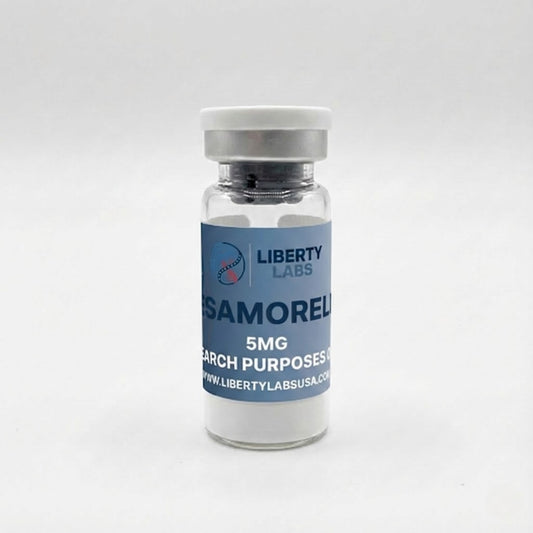
TESAMORELIN
Regular price From $38.90Regular priceUnit price per -
 Sold out
TIRZEPATIDE
Regular price From $46.10Regular priceUnit price per -
 Sold out
5-AMINO-1MQ
Regular price $76.80Regular priceUnit price per -
 Sold out
ACETIC ACID WATER
Regular price $10.20Regular priceUnit price per -
 Sold out
BACTERIOSTATIC WATER
Regular price $8.20Regular priceUnit price per -
CJC-1295 + IPAMORELIN
Regular price $69.70Regular priceUnit price per