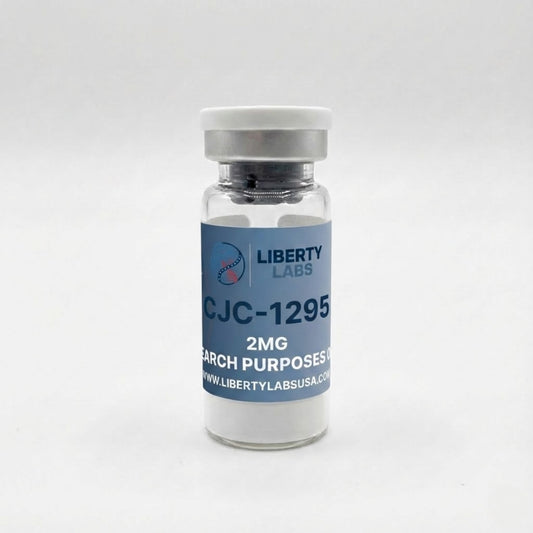
TB-500
TB-500
✔️Form: Lyophilized White Powder
✔️Purity: >99% (HPLC)
✔️SKU: TB-500-LYO-5MG
Couldn't load pickup availability
- Free Shipping
- Easy Returns
- Secure Checkout
Chemical Makeup and Sequence
Chemical Makeup and Sequence
Chemical Makeup:
- Molecular Formula: C38, H68, N10, O14
- Molecular Weight: 889.02 g/mol
- Synonyms: Thymosin Beta-4 (Active Fragment), Ac-LKKTETQ, Tb4 (17-23)
Sequence:
- Ac-Leu-Lys-Lys-Thr-Glu-Thr-Gln
Research and Clinical Studies
Research and Clinical Studies
[TB-500] and Wound Healing In murine and in vitro models, [TB-500] has been observed to accelerate the migration of keratinocytes and endothelial cells to the site of injury. Studies suggest that the peptide does not directly stimulate cell proliferation but rather enhances cell migration (chemotaxis). Research indicates this mechanism may lead to faster closure of dermal wounds and increased collagen deposition, potentially reducing the formation of fibrous scar tissue by modulating myofibroblast activity.
[TB-500] and Cardiovascular Recovery Experimental data from ischemic heart models suggests that Thymosin Beta-4 derivatives may promote cardiomyocyte survival and stimulate angiogenesis in damaged tissue. Research demonstrates that administration of the peptide in animal subjects following myocardial infarction resulted in preserved ventricular function and reduced scar size. It is hypothesized that [TB-500] activates epicardial progenitor cells, facilitating the repair of damaged myocardium.
[TB-500] and Inflammation Studies indicate that [TB-500] possesses significant anti-inflammatory properties. In models of corneal injury and contact dermatitis, the peptide was observed to downregulate the expression of pro-inflammatory cytokines and chemokines. It is suggested that this modulation helps minimize secondary tissue damage caused by excessive inflammatory responses, thereby creating a more favorable environment for cellular regeneration.
[TB-500] and Neuroprotection Emerging research explores the potential of [TB-500] in the central and peripheral nervous systems. In rodent models of neurological injury, treatment with the peptide was associated with improved functional recovery and remyelination. The proposed mechanism involves the promotion of oligodendrocyte differentiation and the reduction of inflammatory toxicity within neural tissues, though further investigation is required to fully elucidate these pathways.
Our Guarantee
Our Guarantee
If you're not 100% satisfied within the first 30 days, just send it back to us and we'll give you a full refund.
No need to worry about the return shipping - we've got you covered!
Shipping Policy
Shipping Policy
We offer fast and reliable shipping on all orders. You can expect to receive it within 7-12 business days based on your location.
Please contact our customer service team for assistance if you have any questions or concerns about your shipment.
Safety and Disclaimers
Safety and Disclaimers
Side Effects & Withdrawal:
In animal studies involving [TB-500], adverse effects are rarely reported at standard experimental dosages. However, potential injection site reactions, such as localized erythema or irritation, have been noted. No evidence of dependency or withdrawal symptoms has been documented in preclinical literature. Long-term safety data in human subjects remains unavailable.
Research Use Only:
This product is intended strictly for laboratory research and development purposes. It is not approved by the FDA for human consumption, diagnostic, or therapeutic use. All information presented here is for educational and informational purposes only and does not constitute medical advice.


Related Products
-
GLUTATHIONE
Regular price From $37.90Regular priceUnit price per -
 Sold out
CAGRILINTIDE
Regular price From $56.40Regular priceUnit price per -
 Sold out
IPAMORELIN
Regular price From $34.80Regular priceUnit price per -
RETATRUTIDE
Regular price From $49.20Regular priceUnit price per -
 Sold out
SERMORELIN
Regular price From $49.20Regular priceUnit price per -
 Sold out
TESAMORELIN
Regular price From $38.90Regular priceUnit price per -
 Sold out
TIRZEPATIDE
Regular price From $46.10Regular priceUnit price per -
 Sold out
5-AMINO-1MQ
Regular price $76.80Regular priceUnit price per -
 Sold out
ACETIC ACID WATER
Regular price $10.20Regular priceUnit price per -
 Sold out
BACTERIOSTATIC WATER
Regular price $8.20Regular priceUnit price per -
CJC-1295 + IPAMORELIN
Regular price $69.70Regular priceUnit price per