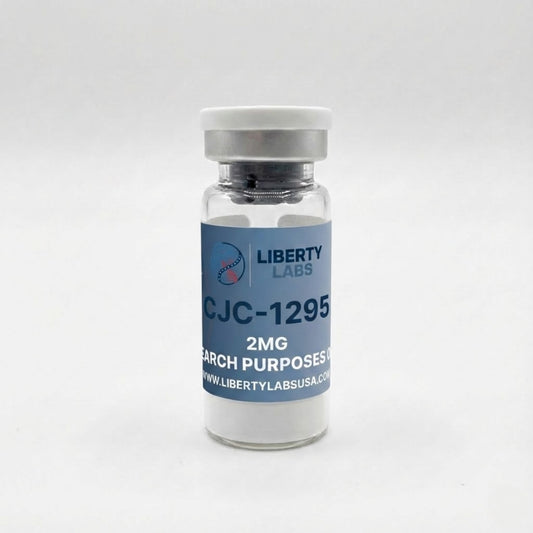
RETATRUTIDE
RETATRUTIDE
✔️Form: Sterile Filtered White Lyophilized Powder
✔️Purity: >99% (Confirmed via HPLC)
✔️Grade: Research Use Only (RUO)
✔️Solubility: Water Soluble
✔️Storage: Stored at -20°C
Couldn't load pickup availability
- Free Shipping
- Easy Returns
- Secure Checkout
Chemical Makeup and Sequence
Chemical Makeup and Sequence
Chemical Makeup:
- Chemical Name: Retatrutide (LY3437943)
- Molecular Formula: C221, H342, N48, O68
- Molecular Weight: ~4731.33 Da
- Sequence Length: 39 Amino Acids
- Synonyms: GIP/GLP-1/Glucagon Triple Receptor Agonist, LY-3437943
Research and Clinical Studies
Research and Clinical Studies
The following sections summarize observations from pre-clinical and early-phase clinical research. All data provided is for educational purposes regarding the peptide's biological interactions.
Retatrutide and Lipolysis (Fat Metabolism)
Research indicates that Retatrutide's activation of the glucagon receptor plays a pivotal role in lipid metabolism. In murine models of diet-induced obesity, administration of the peptide was correlated with a significant reduction in adipose tissue mass. The mechanism is hypothesized to involve glucagon-mediated upregulation of mitochondrial uncoupling, leading to increased thermogenesis and lipolysis. Unlike GLP-1 mono-agonists, which primarily influence satiety, the inclusion of glucagon agonism appears to actively promote the oxidation of stored lipids.
Retatrutide and Glycemic Control
Studies involving non-human primates and early clinical trials have assessed the peptide’s impact on glucose homeostasis. Observations suggest that the synergistic activation of GIP and GLP-1 receptors enhances insulin secretion in a glucose-dependent manner while simultaneously suppressing inappropriate glucagon secretion during hyperglycemia. Data points to substantial reductions in HbA1c levels, with research subjects exhibiting improved insulin sensitivity indices compared to baseline measurements.
Retatrutide and Hepatic Steatosis
Investigation into non-alcoholic fatty liver disease (NAFLD) models suggests that Retatrutide may exert a protective effect on hepatic tissue. The reduction of liver fat content (hepatic steatosis) has been a primary endpoint in recent Phase 2 trials. It is postulated that the peptide facilitates the clearance of intrahepatic triglycerides through enhanced lipid export and oxidation. In trials, significant normalization of liver enzymes (ALT and AST) and reduction in liver fat volume were documented, suggesting potential utility in metabolic liver research.
Retatrutide and Energy Expenditure
A distinct characteristic of Retatrutide observed in metabolic chamber studies is the modulation of resting energy expenditure (REE). While GLP-1 and GIP agonists typically reduce energy intake via appetite suppression, the glucagon component of Retatrutide has been linked to an increase in basal metabolic rate. Murine subjects administered the peptide displayed higher oxygen consumption rates, indicative of elevated energy expenditure, independent of locomotor activity. This dual-pathway approach (reduced intake plus increased expenditure) is a key area of ongoing investigation.
Our Guarantee
Our Guarantee
If you're not 100% satisfied within the first 30 days, just send it back to us and we'll give you a full refund.
No need to worry about the return shipping - we've got you covered!
Shipping Policy
Shipping Policy
We offer fast and reliable shipping on all orders. You can expect to receive it within 7-12 business days based on your location.
Please contact our customer service team for assistance if you have any questions or concerns about your shipment.
Safety and Disclaimers
Safety and Disclaimers
Safety, Side Effects, & Toxicology:
In animal studies and clinical trials, the safety profile of Retatrutide has been closely monitored. The most commonly reported adverse events are gastrointestinal in nature, consistent with the incretin mimetic class.
- Gastrointestinal: Nausea, vomiting, diarrhea, and decreased appetite were observed, particularly during the dose-escalation phases.
- Cardiovascular: Transient increases in heart rate have been noted in some subjects, likely attributable to the glucagon receptor activation.
- Cutaneous: Injection site reactions (erythema, pruritus) have been documented but are generally mild.
Withdrawal/Cessation:
In research settings, abrupt cessation of the peptide has been associated with a gradual return to baseline metabolic parameters, including the regain of adipose mass and reversal of glycemic improvements.
Product Disclaimer:
This product is intended exclusively for laboratory research and development purposes. It is not intended for human therapeutic use, diagnostic use, or consumption. The statements made regarding this product have not been evaluated by the Food and Drug Administration. This product is not a drug, supplement, or food. The purchaser assumes all responsibility for the proper handling, storage, and disposal of this material in accordance with local, state, and federal laws.


Related Products
-
GLUTATHIONE
Regular price From $37.90Regular priceUnit price per -
 Sold out
CAGRILINTIDE
Regular price From $56.40Regular priceUnit price per -
 Sold out
IPAMORELIN
Regular price From $34.80Regular priceUnit price per -
RETATRUTIDE
Regular price From $49.20Regular priceUnit price per -
 Sold out
SERMORELIN
Regular price From $49.20Regular priceUnit price per -
 Sold out
TESAMORELIN
Regular price From $38.90Regular priceUnit price per -
 Sold out
TIRZEPATIDE
Regular price From $46.10Regular priceUnit price per -
 Sold out
5-AMINO-1MQ
Regular price $76.80Regular priceUnit price per -
 Sold out
ACETIC ACID WATER
Regular price $10.20Regular priceUnit price per -
 Sold out
BACTERIOSTATIC WATER
Regular price $8.20Regular priceUnit price per -
CJC-1295 + IPAMORELIN
Regular price $69.70Regular priceUnit price per