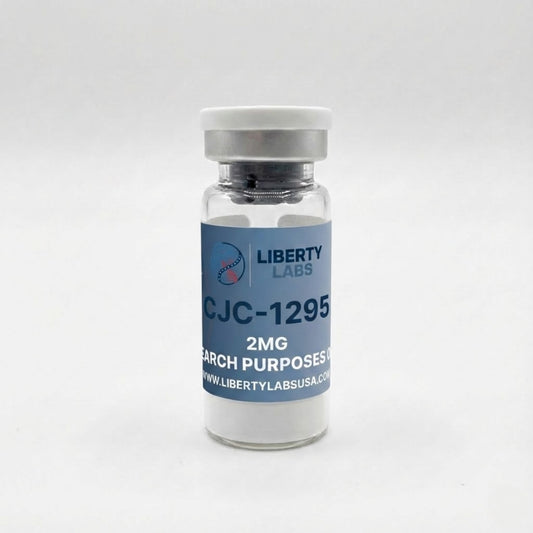
MELANOTAN I
MELANOTAN I
✔️Form: Lyophilized Powder
✔️Purity: >99% (HPLC)
✔️SKU: MT1-10MG-LYO
Couldn't load pickup availability
- Free Shipping
- Easy Returns
- Secure Checkout
Chemical Makeup and Sequence
Chemical Makeup and Sequence
Chemical Makeup:
- Molecular Formula: C78, H111, N21, O19
- Molecular Weight: 1646.85 g/mol
- Synonyms: Afamelanotide, [Nle4, D-Phe7]-a-MSH, NDP-MSH4
Research and Clinical Studies
Research and Clinical Studies
[MELANOTAN I] and Photoprotection
Research indicates that [MELANOTAN I] plays a significant role in photoprotection through the induction of eumelanin synthesis. In clinical models involving Erythropoietic Protoporphyria (EPP), administration of the peptide was observed to increase the "pain-free" duration of sunlight exposure. Eumelanin acts as a physical barrier that absorbs and scatters UV radiation, and it also functions as a scavenger of reactive oxygen species (ROS). Studies suggest that the suprabasal accumulation of melanin induced by MC1R activation provides a biological shield, potentially reducing phototoxicity in compromised tissue models.
[MELANOTAN I] and DNA Repair
Beyond pigmentation, investigation into MC1R signaling pathways suggests a potential influence on genomic stability. Activation of the MC1R by [MELANOTAN I] has been linked to the enhancement of Nucleotide Excision Repair (NER) mechanisms. In irradiated melanocyte cultures, treatment with a-MSH analogues was shown to accelerate the clearance of cyclobutane pyrimidine dimers (CPDs), which are primary DNA lesions caused by UV exposure. This suggests that the peptide may contribute to the maintenance of genomic integrity following oxidative stress.
[MELANOTAN I] and Inflammation
The melanocortin system is widely recognized for its modulatory effects on inflammation. [MELANOTAN I] exerts influence via MC1R and MC3R subtypes, which are expressed on various immune cells, including macrophages and neutrophils. In murine models of inflammation, agonism of these receptors was correlated with a reduction in pro-inflammatory cytokines such as alpha and an upregulation of anti-inflammatory mediators. Research posits that [MELANOTAN I] may mitigate acute inflammatory responses through the inhibition of the signaling pathway.
[MELANOTAN I] and Metabolic Regulation
While primarily studied for dermatological applications, [MELANOTAN I] interacts with the melanocortin system involved in energy homeostasis. Although its affinity for the MC4R (the primary receptor for appetite regulation) is lower than that of Melanotan II, research in rodent models suggests a potential, albeit milder, influence on lipid metabolism and insulin sensitivity. It is hypothesized that peripheral activation of melanocortin receptors may alter fatty acid oxidation rates, though this pathway remains a subject of ongoing investigation in metabolic research.
Our Guarantee
Our Guarantee
If you're not 100% satisfied within the first 30 days, just send it back to us and we'll give you a full refund.
No need to worry about the return shipping - we've got you covered!
Shipping Policy
Shipping Policy
We offer fast and reliable shipping on all orders. You can expect to receive it within 7-12 business days based on your location.
Please contact our customer service team for assistance if you have any questions or concerns about your shipment.
Safety and Disclaimers
Safety and Disclaimers
Side Effects:
In animal studies and early-phase trials, adverse events associated with [MELANOTAN I] administration were generally dose-dependent. Commonly observed physiological responses included transient nausea, facial flushing, and fatigue. Unlike Melanotan II, [MELANOTAN I] exhibits significantly reduced affinity for central MC receptors linked to sexual arousal; therefore, non-volitional erections are rarely reported in the literature. Darkening of existing nevi (moles) has been documented as a result of systemic melanogenesis stimulation.
Research Use Only:
This product is sold for RESEARCH USE ONLY. It is not intended for human consumption, diagnostic, therapeutic, or clinical use. The information provided is for educational and scientific purposes only and does not constitute medical advice. Handling should be performed only by qualified researchers equipped with appropriate laboratory safety gear.

Related Products
-
GLUTATHIONE
Regular price From $37.90Regular priceUnit price per -
 Sold out
CAGRILINTIDE
Regular price From $56.40Regular priceUnit price per -
 Sold out
IPAMORELIN
Regular price From $34.80Regular priceUnit price per -
RETATRUTIDE
Regular price From $49.20Regular priceUnit price per -
 Sold out
SERMORELIN
Regular price From $49.20Regular priceUnit price per -
 Sold out
TESAMORELIN
Regular price From $38.90Regular priceUnit price per -
 Sold out
TIRZEPATIDE
Regular price From $46.10Regular priceUnit price per -
 Sold out
5-AMINO-1MQ
Regular price $76.80Regular priceUnit price per -
 Sold out
ACETIC ACID WATER
Regular price $10.20Regular priceUnit price per -
 Sold out
BACTERIOSTATIC WATER
Regular price $8.20Regular priceUnit price per -
CJC-1295 + IPAMORELIN
Regular price $69.70Regular priceUnit price per